Korean Soups and Stews
Highlighted under: Worldwide Favorites
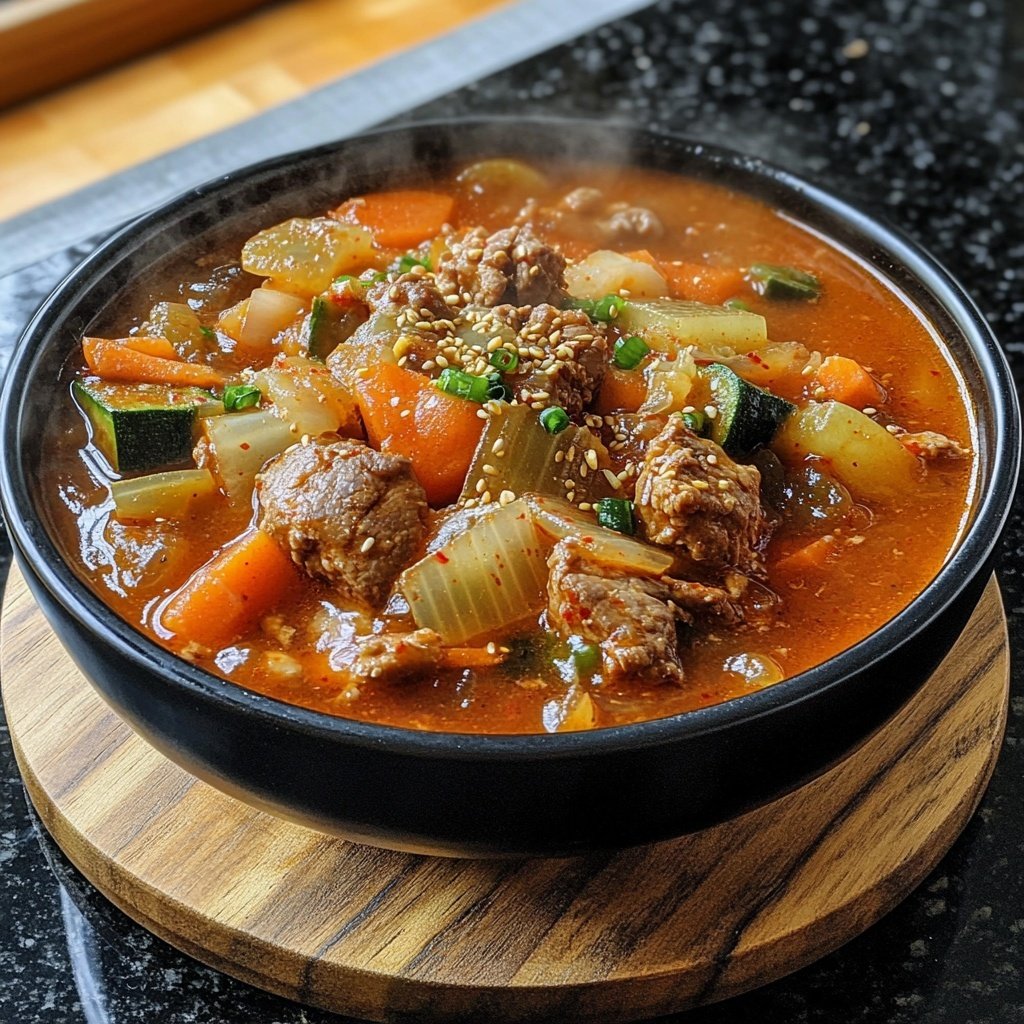
Explore the rich and comforting world of Korean soups and stews, a staple in Korean cuisine known for their depth of flavor and satisfying warmth.

Korean soups and stews are more than just comforting meals; they're a cultural experience that brings family and friends together. Each recipe is a blend of savory flavors and fresh ingredients, often made with love and passed down through generations.
Why You'll Love This Recipe
- Bold and spicy flavors that awaken your taste buds
- Nourishing ingredients that are good for the soul
- Perfect for sharing with family and friends
The Heart of Korean Cuisine
Korean soups and stews are more than just meals; they are a reflection of the culture's deep-rooted culinary traditions. Known for their bold flavors and hearty ingredients, these dishes are an integral part of everyday life in Korea. Whether it’s a chilly winter evening or a casual gathering with friends, a warm bowl of soup can elevate the dining experience and bring everyone together around the table.
Each soup or stew tells a story, often passed down through generations, showcasing the balance of flavors and textures that Korean cuisine is famous for. From the spicy, tangy notes of kimchi jjigae to the comforting softness of sundubu jjigae, there is a dish to suit every palate and occasion.
Health Benefits of Korean Soups
Korean soups and stews are not only delicious but also packed with nutrients. Ingredients like kimchi are rich in probiotics, which are beneficial for gut health, while tofu provides a great source of plant-based protein. The use of fresh vegetables and seafood adds essential vitamins and minerals, making these dishes nourishing choices for any meal.
Moreover, the spices used, such as gochugaru and gochujang, not only enhance the flavors but also offer health benefits. They can boost metabolism and provide anti-inflammatory properties, making these soups not just comforting but also a wholesome addition to your diet.
Perfect for Any Occasion
Korean soups and stews are incredibly versatile, making them suitable for various occasions. Whether you are hosting a dinner party, enjoying a family meal, or simply craving something warm and satisfying, these dishes can easily adapt to your needs. They can be served as a main course or as a side dish, allowing for a shared dining experience that encourages conversation and connection.
Additionally, these recipes can be customized to suit different dietary preferences. Feel free to switch out proteins, add more vegetables, or adjust the spice level to create a dish that everyone will love. The beauty of Korean soups and stews lies in their adaptability, ensuring that you can enjoy these flavors no matter the occasion.
Ingredients
For Kimchi Jjigae (Kimchi Stew)
- 2 cups kimchi, chopped
- 1 cup tofu, cubed
- 1 onion, sliced
- 2 green onions, chopped
- 2 cups vegetable broth
- 1 tablespoon gochugaru (Korean red pepper flakes)
- 1 teaspoon soy sauce
- 1 tablespoon sesame oil
For Sundubu Jjigae (Soft Tofu Stew)
- 1 cup soft tofu
- 1/2 cup seafood (shrimp, clams, or squid)
- 1 onion, diced
- 1 garlic clove, minced
- 2 cups vegetable broth
- 1 tablespoon gochujang (Korean red pepper paste)
- 1 tablespoon sesame oil
- 1 egg (optional)
Make sure to adjust the spice levels according to your preference!
Instructions
Prepare Kimchi Jjigae
- In a pot, heat sesame oil over medium heat. Add onion and sauté until translucent.
- Add chopped kimchi and gochugaru; stir-fry for 5 minutes.
- Pour in vegetable broth and bring to a boil. Reduce heat and simmer for 20 minutes.
- Add tofu and soy sauce, simmer for another 5 minutes. Garnish with green onions before serving.
Prepare Sundubu Jjigae
- In another pot, heat sesame oil over medium heat. Sauté onion and garlic until fragrant.
- Add seafood and cook until opaque.
- Stir in gochujang and broth, bring to a boil.
- Carefully add soft tofu and simmer for 10 minutes. If desired, crack an egg on top just before serving.
Serve both stews hot with steamed rice for a complete meal!
Pro Tips
- For the best flavor, allow the stews to simmer longer. Use fresh ingredients for optimal taste.
Storing and Reheating
Storing your Korean soups and stews is simple and convenient. Keep any leftovers in an airtight container in the refrigerator, where they can last for up to three days. The flavors often deepen and improve the longer they sit, making them even more delightful on the second day.
When it comes to reheating, use a stovetop pot for the best results. Gently warm your soup over medium heat, stirring occasionally to ensure even heating. If the stew has thickened too much, feel free to add a splash of broth or water to reach your desired consistency.
Pairing Suggestions
To elevate your Korean soup and stew experience, consider pairing them with traditional side dishes known as banchan. Options like pickled radishes, seasoned spinach, or even a simple cucumber salad can complement the bold flavors of the stews beautifully.
For a complete meal, serve your soup with a side of steamed rice. The rice acts as a perfect balance to the spicy and savory notes of the stew, allowing you to savor every bite while enjoying the comforting warmth of the dish.
Questions About Recipes
→ Can I make Korean soups and stews vegetarian?
Yes, you can use vegetable broth and skip any meat or seafood.
→ How spicy are these dishes?
The spice level can be adjusted by adding less gochugaru or gochujang.
→ What can I serve with Korean soups and stews?
These dishes are best served with steamed rice and some side dishes (banchan).
→ How can I store leftovers?
Store in an airtight container in the fridge for up to 3 days. Reheat before serving.
Korean Soups and Stews
Created by: Hayley Morton
Recipe Type: Worldwide Favorites
Skill Level: Intermediate
Final Quantity: 4 servings
What You'll Need
For Kimchi Jjigae (Kimchi Stew)
- 2 cups kimchi, chopped
- 1 cup tofu, cubed
- 1 onion, sliced
- 2 green onions, chopped
- 2 cups vegetable broth
- 1 tablespoon gochugaru (Korean red pepper flakes)
- 1 teaspoon soy sauce
- 1 tablespoon sesame oil
For Sundubu Jjigae (Soft Tofu Stew)
- 1 cup soft tofu
- 1/2 cup seafood (shrimp, clams, or squid)
- 1 onion, diced
- 1 garlic clove, minced
- 2 cups vegetable broth
- 1 tablespoon gochujang (Korean red pepper paste)
- 1 tablespoon sesame oil
- 1 egg (optional)
How-To Steps
- In a pot, heat sesame oil over medium heat. Add onion and sauté until translucent.
- Add chopped kimchi and gochugaru; stir-fry for 5 minutes.
- Pour in vegetable broth and bring to a boil. Reduce heat and simmer for 20 minutes.
- Add tofu and soy sauce, simmer for another 5 minutes. Garnish with green onions before serving.
- In another pot, heat sesame oil over medium heat. Sauté onion and garlic until fragrant.
- Add seafood and cook until opaque.
- Stir in gochujang and broth, bring to a boil.
- Carefully add soft tofu and simmer for 10 minutes. If desired, crack an egg on top just before serving.
Extra Tips
- For the best flavor, allow the stews to simmer longer. Use fresh ingredients for optimal taste.
Nutritional Breakdown (Per Serving)
- Calories: 450 kcal
- Total Fat: 28g
- Saturated Fat: 5g
- Cholesterol: 50mg
- Sodium: 800mg
- Total Carbohydrates: 30g
- Dietary Fiber: 4g
- Sugars: 5g
- Protein: 20g